
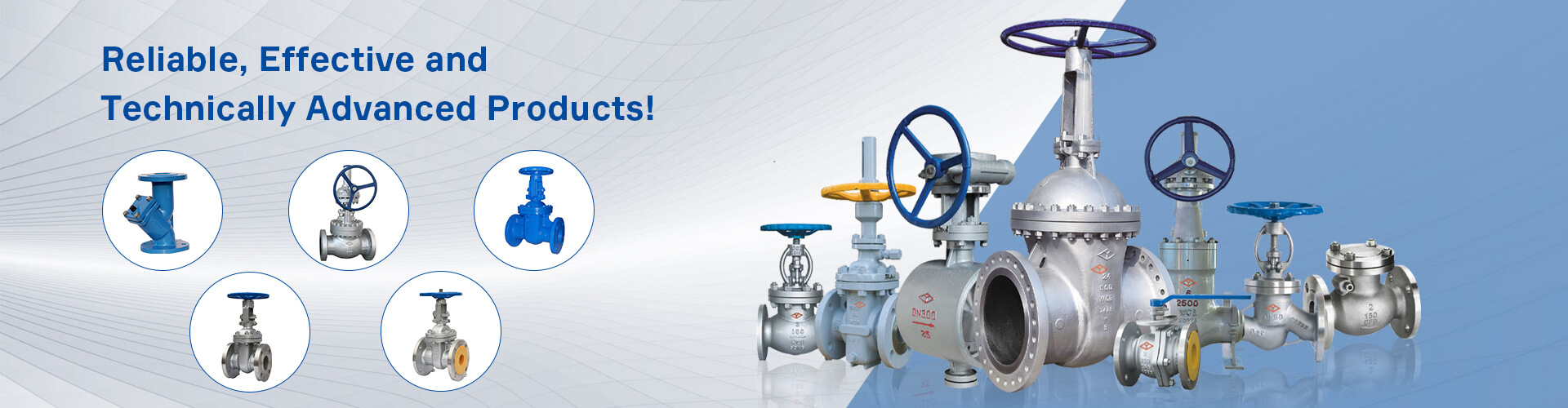
Ball valves are widely used in industrial, commercial, and residential piping systems to control the flow of liquids and gases. They feature a spherical closure unit (the ball) that rotates 90° to open or close the flow. Ball valves are valued for their tight sealing, durability, low pressure drop, and quick operation. Depending on the material of construction, ball valves can be categorized into stainless steel, carbon steel, cast iron, and brass, each suited to specific applications, environments, and fluid characteristics.
Understanding the differences among these materials is essential for proper valve selection to ensure safety, efficiency, and longevity of the system.
Stainless steel ball valves are made from stainless steel grades such as 304, 316, or 316L. They provide excellent corrosion resistance, mechanical strength, and high-temperature tolerance.
Corrosion resistance: Effective against acids, alkalis, seawater, and corrosive chemicals.
High strength: Suitable for high-pressure and high-temperature applications.
Longevity: Resistant to wear, scaling, and erosion.
Hygienic and cleanable: Ideal for food, beverage, pharmaceutical, and sanitary applications.
Petrochemical plants
Chemical processing systems
Food and beverage processing
Water and wastewater treatment
Marine and offshore systems
Carbon steel ball valves are made from carbon steel materials such as WCB, WC6, or WC9, offering high strength and durability at a relatively lower cost than stainless steel. They are generally used in applications where corrosion is less severe or where protective coatings are applied.
High mechanical strength: Suitable for high-pressure systems.
Cost-effective: Cheaper than stainless steel, suitable for large-diameter pipelines.
Temperature tolerance: Can handle high-temperature fluids (steam, hydrocarbons).
Durable under stress: Resistant to impact and pressure surges.
Steam pipelines
Oil and gas transmission
High-pressure water and industrial systems
Power generation plants
Cast iron ball valves are made from gray iron or ductile iron and are primarily used in low to medium-pressure applications. They are heavier and less corrosion-resistant than steel valves but are cost-effective for certain water, gas, and non-corrosive fluid systems.
Affordable and economical: Ideal for municipal water systems and irrigation.
Good wear resistance: Suitable for moderate pressure systems.
Limited corrosion resistance: Should not be used for aggressive chemicals without coating or lining.
Ease of installation: Flanged or threaded connections available.
Municipal water supply and distribution
Irrigation systems
HVAC systems
Low-pressure industrial piping
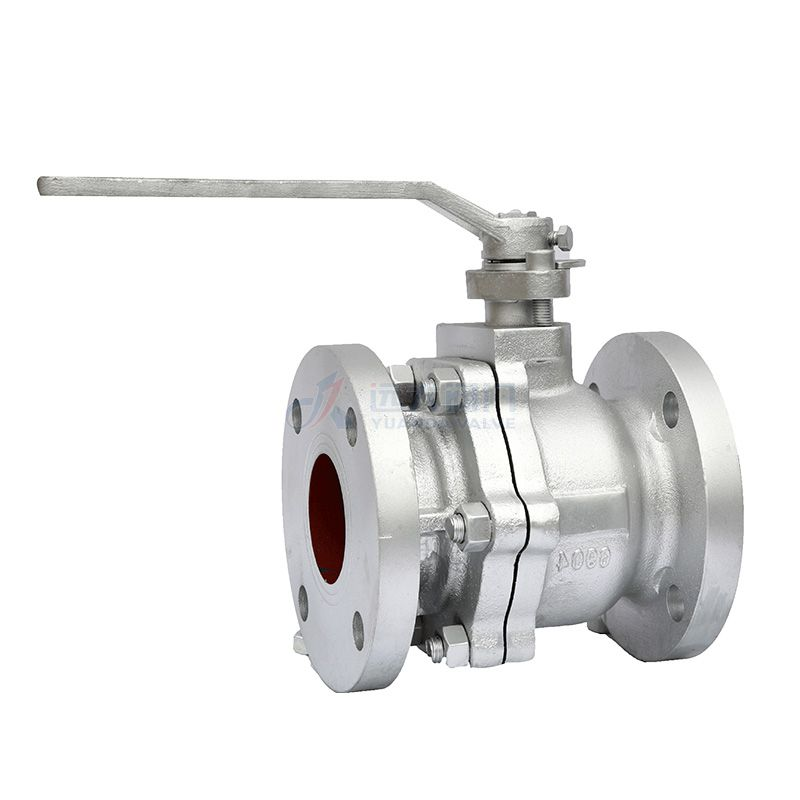
Brass ball valves are manufactured from copper-zinc alloys and are commonly used in residential, commercial, and light industrial applications. They are corrosion-resistant, lightweight, and easy to operate.
Corrosion resistance: Effective against water, air, and mild chemicals.
Compact and lightweight: Easy installation and handling.
Cost-effective: Affordable for residential and commercial plumbing.
Smooth operation: Often equipped with threaded or compression connections.
Domestic water and gas piping
Plumbing and heating systems
Low-pressure air and gas lines
Laboratory and light chemical handling
| Material | Corrosion Resistance | Pressure Rating | Temperature Range | Cost | Common Applications |
|---|---|---|---|---|---|
| Stainless Steel | Excellent | High | -50°C to 400°C | High | Chemicals, petrochemicals, marine |
| Carbon Steel | Moderate | Very High | -29°C to 425°C | Moderate | Steam, oil, high-pressure systems |
| Cast Iron | Low | Medium | 0°C to 150°C | Low | Water, HVAC, irrigation |
| Brass | Moderate | Low-Medium | -20°C to 120°C | Low | Domestic water, gas, low-pressure |
Selecting the right ball valve material is critical for system safety, performance, and longevity.
Stainless steel: Best for corrosive and high-temperature environments.
Carbon steel: Ideal for high-pressure, high-strength applications.
Cast iron: Cost-effective choice for low to medium-pressure water and HVAC systems.
Brass: Suitable for residential, commercial, and low-pressure industrial uses.
Understanding the specific operating conditions, fluid type, pressure, temperature, and environmental factors ensures optimal valve selection and long-term operational reliability.