
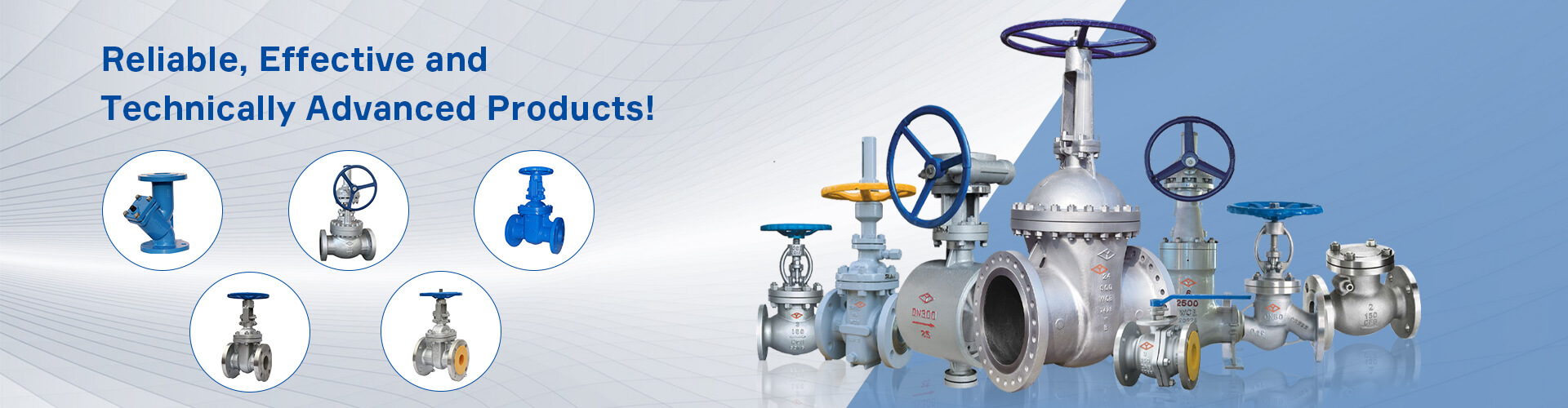
Industrial valve installation is an important part of pipeline system design. Even when a valve has the correct size, pressure rating, and material, incorrect installation can affect its operation, sealing performance, and service life.
One detail that deserves particular attention is installation orientation. Some valves can be installed in different positions, while others have specific requirements for flow direction or mounting orientation. Understanding these differences helps engineers, contractors, and maintenance teams avoid installation problems.
Industrial valves are designed according to their internal structure and intended operating function. The direction of fluid flow and the position of internal components can influence how a valve performs.
Incorrect installation may result in:
Improper operation of internal components.
Reduced flow capacity or increased pressure loss.
Unreliable opening or closing.
Poor sealing performance.
Difficult inspection and maintenance.
Increased risk of damage under certain operating conditions.
Not every valve has the same installation requirements. Buyers and installers should always consult the manufacturer's installation instructions and the approved piping design.

Different valve designs respond differently to fluid flow. Understanding their characteristics is essential before installation.
Gate valves are commonly used for on-off isolation in industrial pipelines. Many conventional gate valve designs allow flow in either direction, but the installation requirements can vary by model and design.
Before installation, users should check the manufacturer's instructions, particularly for valves with specific pressure or sealing arrangements.
Gate valves should generally be installed in a position that allows convenient operation and maintenance. They are normally intended for fully open or fully closed service rather than continuous throttling.
Globe valves are often used for flow regulation. Their internal passage and disc arrangement influence pressure loss and flow characteristics.
Many globe valve designs have a preferred flow direction. The correct direction should be confirmed using the flow arrow on the valve body or the manufacturer's documentation.
Installing a globe valve in the wrong direction may affect operating performance or increase stress on internal components, depending on its design.
Ball valves use a rotating ball to open or close the flow passage. Many standard ball valves are designed for bidirectional shutoff, but some specialized designs have directional requirements.
Installation should also account for the valve's handle position, actuator clearance, maintenance access, and any specified mounting limitations.
Butterfly valves are widely used in suitable water and utility pipelines. Their installation requirements depend on the valve design, seat construction, disc configuration, and operating conditions.
Some butterfly valves are suitable for bidirectional flow, while others have a preferred flow direction. The manufacturer's instructions should be checked before installation.
Check valves are designed to permit flow in one direction and prevent reverse flow. Correct flow direction is therefore essential.
Most check valves have an arrow or other marking indicating the permitted flow direction. They must be installed according to this marking and the design requirements of the specific valve.
Flow direction is only one part of correct installation. The physical orientation of a valve can also affect its performance.
For example, certain check valve designs require a specific orientation to allow the internal disc or other moving component to operate correctly. Some valves are designed primarily for horizontal pipelines, while others may also be suitable for vertical installation under defined flow conditions.
Before installation, engineers should confirm:
Whether horizontal or vertical installation is permitted.
Whether the valve stem or operating mechanism has mounting restrictions.
Whether the actuator requires a specific position.
Whether gravity affects the movement of internal components.
Whether sufficient space is available for operation and maintenance.
Proper pipeline preparation helps reduce the risk of damage during installation and operation.
Before fitting a valve, installation teams should inspect the pipeline and confirm that the connection dimensions match the approved drawings.
Important checks include:
Pipeline cleanliness: Remove welding debris, dirt, and other foreign materials that could damage sealing surfaces or interfere with valve movement.
Connection alignment: Ensure that the pipeline flanges or threaded connections are properly aligned with the valve.
Support and load control: Avoid using the valve as a substitute for proper pipeline support. Excessive external loads may affect connections or valve body integrity.
Installation clearance: Confirm that there is enough room to operate the valve, remove components, and carry out future maintenance.
Protection of sealing surfaces: Handle the valve carefully to prevent damage to flanges, seats, and other critical surfaces.
These steps help ensure that the valve is installed under suitable mechanical conditions.
Several installation mistakes can be prevented through careful review of product markings and technical documentation.
| Common mistake | Potential consequence |
|---|---|
| Ignoring the flow arrow | Incorrect flow direction, especially for check valves |
| Using an unsuitable mounting position | Improper operation of certain valve designs |
| Installing misaligned flanges | Additional stress on the valve and connections |
| Applying excessive installation force | Damage to threads, flanges, or valve components |
| Ignoring actuator clearance | Difficult operation and maintenance |
| Failing to clean the pipeline | Foreign materials may affect internal components |
Installation teams should not assume that all valves of the same type share identical mounting requirements. Product-specific instructions are essential.
After installation, the valve and its connections should be inspected before the pipeline is placed into normal service.
Depending on the project specification, inspection may include:
Checking the valve's installation direction and orientation.
Confirming that connections are properly assembled.
Inspecting for visible damage or leakage.
Verifying manual or actuator operation.
Confirming that the valve reaches the required open and closed positions.
Conducting the specified pressure or functional tests.
Testing procedures should follow the applicable project requirements and relevant standards. The test pressure, medium, duration, and acceptance criteria should be established by the approved procedure.
For critical pipelines, commissioning teams should also verify that the valve arrangement matches the approved piping and instrumentation diagrams.
Installation problems can sometimes be avoided before a product leaves the factory.
When ordering industrial valves, buyers should provide sufficient technical information and clarify any installation restrictions.
Useful information includes:
Valve type, size, and pressure rating.
Fluid type and flow direction.
Horizontal or vertical installation requirements.
Required end connections and dimensions.
Operating method and actuator arrangement.
Applicable design and testing standards.
Any special installation or maintenance requirements.
If the valve will be installed in a replacement project, buyers should also verify the existing pipeline dimensions and connection details.
Clear technical communication helps ensure that the supplied valve is suitable for the intended installation.
Selecting the correct valve is only one part of a successful piping project. Buyers should also consider product specifications, installation requirements, manufacturing quality, and technical documentation.
YUANDA Valve Group manufactures industrial gate valves, globe valves, ball valves, butterfly valves, and check valves. Its product portfolio includes different standards, materials, and specifications for a range of industrial applications.
Correct valve installation helps support reliable pipeline operation. Flow direction, mounting orientation, pipeline alignment, connection conditions, and maintenance clearance can all influence valve performance.
Because installation requirements vary by valve design and model, engineers and contractors should always refer to the manufacturer's documentation rather than rely on general assumptions.
By confirming these details before installation and carrying out appropriate inspections afterward, industrial teams can reduce avoidable installation problems and support dependable valve operation.
Previous: None