
Choosing the right valve is crucial for any industrial fluid system. Globe valves are widely recognized for their versatility and precise control, making them ideal for applications that require accurate flow regulation and tight sealing. This article provides a comprehensive overview of globe valves, including their definition, working principle, common types, connection styles, typical applications, and pros and cons.
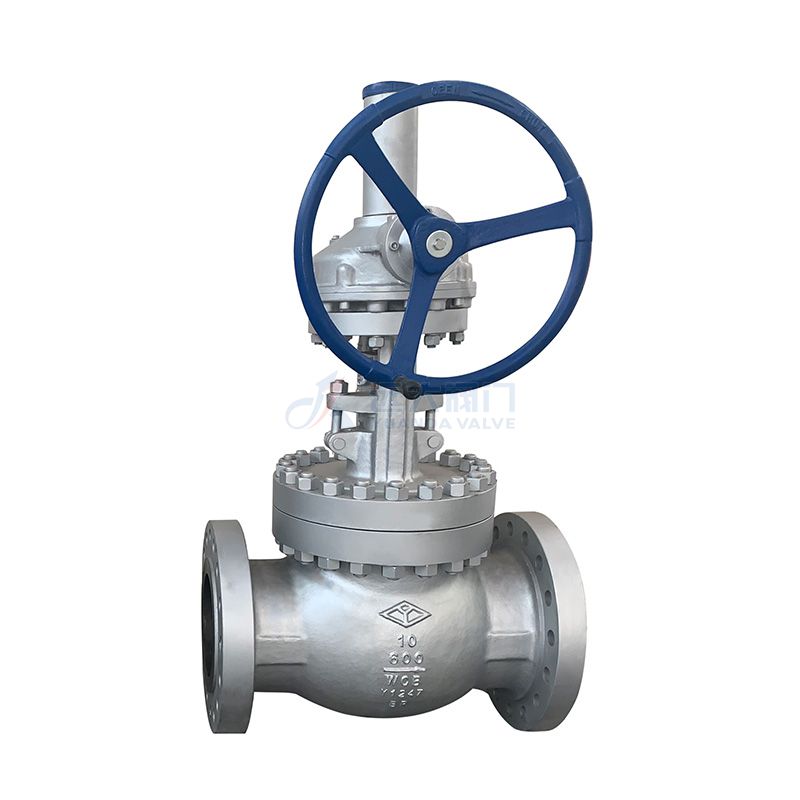
A globe valve is a type of linear motion valve used to start, stop, or regulate fluid flow. Its key components include a movable disc (or plug) and a fixed seat inside the valve body. By turning a handwheel or actuator, the valve stem raises or lowers the disc, controlling contact with the seat and regulating fluid flow.
This design allows precise flow control, making globe valves suitable for a variety of industrial applications.
Globe valves regulate flow through linear motion perpendicular to the flow path:
Disc Raised: Fluid passes through freely.
Disc Partially Lowered: Flow can be finely adjusted.
Disc Fully Seated: The valve provides a tight shut-off.
While highly precise, globe valves induce a higher pressure drop than some other valve types due to the fluid’s change in direction within the valve.
Globe valves come in several structural variations to suit different applications:
1. T‑Type (Z‑Pattern) Globe Valve
The most common design, featuring a horizontally oriented seat. The fluid changes direction twice inside the valve, making it suitable for general flow regulation.
2. Y‑Type Globe Valve
The seat is angled relative to the valve body, creating a straighter flow path and reducing pressure loss. Ideal for high-flow applications requiring minimal resistance.
3. Angle Globe Valve
This design changes the flow direction by roughly 90 degrees within the valve, useful for piping layouts that require directional changes while minimizing additional fittings.
The valve bonnet determines ease of maintenance and pressure-handling capability. Common connection types include:
Bolted Bonnet: Easy installation, suitable for various sizes and pressures.
Welded Bonnet: Provides high sealing integrity, ideal for high-pressure or permanent installations, though maintenance is more difficult.
Flanged Bonnet: Quick to install or remove, facilitating periodic maintenance.
Pressure Seal Bonnet: Tightens with internal pressure, suitable for high-temperature, high-pressure environments.
Globe valves are valued for their flow control accuracy and sealing reliability in various industrial fields:
Wastewater Treatment: Precise chemical or water flow regulation.
Chemical Processing: Controlling corrosive or hazardous media.
Food and Beverage Production: Maintaining consistent liquid flow in production processes.
Power Plants: Managing steam or cooling water systems and regulating pressure.
They are also used for fluid mixing, flow throttling, and pressure control in many other scenarios.
Advantages:
Precise flow control suitable for stepwise adjustments.
Excellent sealing capability to minimize leakage.
Robust construction, capable of withstanding high-pressure systems.
Limitations:
Internal flow path causes higher pressure drop.
Requires more operating force or an actuator compared to some other valves, such as ball valves.
More complex structure can increase installation and maintenance costs.
Globe valves are a reliable solution for controlling and regulating fluid flow in industrial systems. Their precision and sealing make them indispensable in chemical, energy, and wastewater industries. Selecting the right type and connection style based on system requirements ensures optimal performance, efficiency, and reliability.
Previous: None