
Unplanned downtime is a major concern for industrial facilities. When a production line or process system stops unexpectedly, the consequences can include lost output, delayed deliveries, additional maintenance costs, and disruption to downstream operations.
Although pumps, motors, and control systems often receive significant attention in reliability programs, industrial valves also play an important role. They regulate fluid movement, isolate equipment, and support maintenance activities across complex piping networks.
Choosing suitable valves and managing them effectively can help industrial facilities reduce avoidable interruptions and maintain more stable operations.
Industrial valves operate in a wide range of conditions, from ordinary water distribution to high-pressure process pipelines. Over time, operating conditions, fluid characteristics, installation quality, and maintenance practices can affect their performance.
A valve that cannot close properly may allow leakage during maintenance. A valve that becomes difficult to operate may delay equipment isolation. A damaged sealing surface may require an unexpected shutdown for inspection and repair.
These problems can affect more than one piece of equipment, particularly when valves are installed in shared pipelines or critical process systems.
For this reason, valve reliability should be considered part of an overall plant maintenance strategy.
One of the most important functions of industrial valves is equipment isolation.
In many facilities, pumps, heat exchangers, tanks, and production units need periodic inspection or repair. Suitable isolation valves allow maintenance teams to separate specific sections of a piping system without necessarily stopping every connected operation.
For example, gate valves and butterfly valves may be used for pipeline isolation, depending on the application and design requirements.
A well-planned isolation arrangement can help maintenance teams:
Separate equipment from active pipelines.
Reduce the scope of maintenance-related shutdowns.
Access individual system sections more efficiently.
Carry out inspections and repairs in a controlled manner.
However, a valve's presence alone does not guarantee safe isolation. Facilities must follow appropriate isolation procedures, verify valve condition, and use additional safeguards where required by the process and safety standards.
Using a valve outside its intended operating conditions can increase wear and maintenance requirements.
For example, a gate valve is generally designed for fully open or fully closed service. Using it for continuous throttling may cause damage to internal components. A globe valve may be more suitable for certain regulating duties, while a butterfly valve can provide a practical solution for suitable large-diameter pipelines.
Ball valves offer quick shutoff in compatible applications, and check valves help prevent reverse flow where required.
The key is to match the valve design to its actual function.
Before specifying a valve, engineers should consider:
Whether it is used for isolation or flow regulation.
How frequently it will be operated.
The pressure and temperature conditions.
The characteristics of the transported medium.
The required sealing performance.
The expected maintenance environment.
Correct application helps avoid unnecessary operating stress and premature deterioration.
Valve performance depends partly on whether the selected materials are suitable for the operating environment.
Industrial pipelines may carry water, steam, oil, gas, chemicals, or fluids containing suspended particles. These media can affect valve bodies, internal components, and sealing surfaces in different ways.
For example, corrosive fluids may require carefully selected body and trim materials. Applications involving abrasive particles may place additional demands on internal components. Temperature fluctuations can also influence sealing performance.
Buyers and engineers should therefore evaluate material compatibility based on actual service conditions rather than choosing materials solely by price or general application category.
The same principle applies to sealing design. Soft-seated and metal-seated valves have different performance characteristics, and the appropriate option depends on temperature, pressure, medium, and leakage requirements.
Preventive maintenance helps identify developing problems before they cause major operational interruptions.
For industrial valves, maintenance teams can establish inspection procedures based on valve type, service conditions, operating frequency, and the consequences of failure.
Typical inspection activities may include:
Checking for external leakage around the body and connections.
Observing whether the valve operates smoothly.
Inspecting actuators and operating mechanisms where applicable.
Reviewing signs of corrosion or external damage.
Checking whether the valve reaches its required open or closed position.
Reviewing previous maintenance and replacement records.
Not every valve requires the same inspection frequency. Valves in demanding or critical services may need more frequent attention than those in ordinary utility systems.
A maintenance schedule based on operating risk is generally more useful than applying identical inspection intervals to every valve in a facility.
Unexpected valve problems can lead to extended downtime when replacement products are not readily available.
Facilities can reduce this risk by identifying critical valves and planning suitable spare parts in advance.
A practical spare parts strategy may include:
Identifying critical equipment: Determine which valves could cause significant production disruption if they fail.
Recording technical information: Maintain valve tags, model numbers, sizes, pressure ratings, materials, and connection details.
Checking replacement compatibility: Confirm face-to-face dimensions, flange standards, pressure ratings, and other installation requirements before ordering.
Reviewing inventory levels: Keep appropriate replacement products or components available according to failure risk and delivery lead times.
This approach helps maintenance and procurement teams respond more quickly when replacement is necessary.
Large industrial facilities may have hundreds or thousands of valves across different production areas. If every system uses unrelated specifications, maintenance teams may face a complicated inventory and replacement process.
Where technically appropriate, standardizing selected valve types, materials, pressure classes, and connection dimensions can simplify maintenance management.
Potential benefits include:
Fewer different spare parts to manage.
Easier identification of replacement products.
More consistent maintenance procedures.
Simplified procurement and technical documentation.
Better familiarity among maintenance personnel.
Standardization should not override application requirements. Critical services may require specialized valve designs or materials, even when other parts of the facility use standardized products.
Valve reliability is influenced by product design, manufacturing quality, material selection, testing, and correct application. Industrial buyers should therefore look beyond the initial purchase price when evaluating manufacturers.
Useful evaluation points include:
Product range and available specifications.
Manufacturing and quality control capabilities.
Material options and traceability documentation.
Applicable design and testing standards.
Inspection and test documentation.
Technical communication and replacement support.
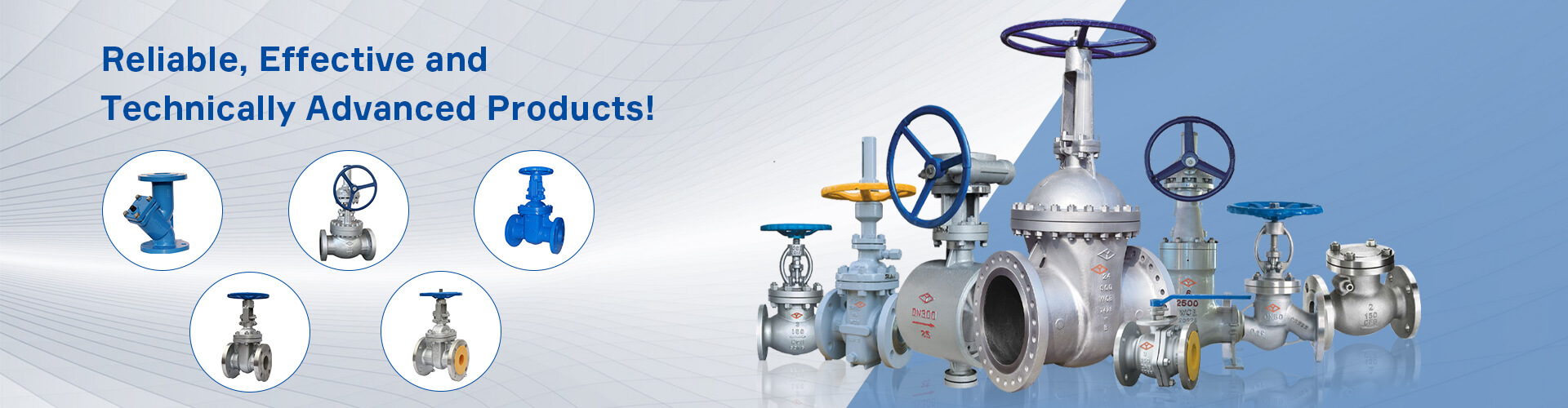
YUANDA Valve Group manufactures a range of industrial valves, including gate, globe, ball, butterfly, and check valves. Its product portfolio covers multiple standards and material options for different industrial applications.
Reducing unplanned plant downtime requires attention to the reliability of the entire process system, including its valves. Suitable valve selection, effective equipment isolation, preventive maintenance, replacement planning, and practical standardization can all contribute to more dependable operations.
For industrial operators and procurement teams, treating valves as important components of plant reliability—not simply as individual pipeline accessories—can lead to better maintenance decisions and more efficient long-term operation.
Previous: None