
Home >> News >> How Can You Select the Most Suitable Stainless Steel Ball Valve for Industrial Applications?
Choosing a stainless steel ball valve is not simply a matter of matching pipe size. In industrial systems, the wrong selection can lead to leakage, pressure loss, frequent maintenance, or even safety risks. A well-matched valve, on the other hand, ensures stable operation and long service life.
Below is a practical guide to help engineers and purchasing managers make informed decisions.
The type of fluid flowing through the pipeline determines material compatibility and sealing requirements.
Water systems – Focus on corrosion resistance and pressure rating.
Oil and gas – Require reliable sealing and high pressure tolerance.
Steam systems – Need valves capable of handling elevated temperatures.
Chemical media – Material grade selection becomes critical.
For corrosive or aggressive fluids, selecting the correct stainless steel grade (such as 304 or 316) significantly affects durability. 316 stainless steel, for example, offers better resistance to chlorides and chemical exposure.
Every valve has a pressure class and temperature range. These must match or exceed system requirements.
Key factors to check:
Maximum working pressure
Maximum and minimum operating temperature
Pressure fluctuations within the system
Using a valve below the required pressure rating can cause deformation or leakage. Overspecifying excessively may increase costs unnecessarily. Balance is important.
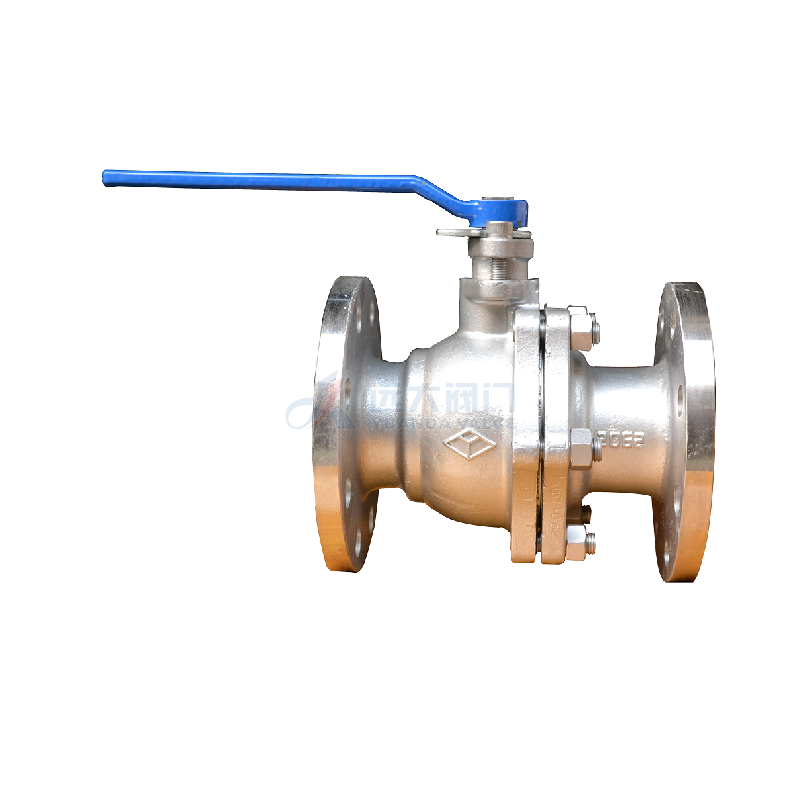
Stainless steel ball valves come in several body configurations, each suited to different scenarios:
Compact and economical. Suitable for low-maintenance systems where disassembly is not frequently required.
Widely used in industrial applications. Offers a good balance between cost and maintainability.
Designed for easy cleaning and internal part replacement. Ideal for systems that require regular inspection or hygienic maintenance.
For food processing or pharmaceutical environments, a three-piece structure often provides operational advantages.
Connection method affects installation time, maintenance convenience, and sealing reliability.
Threaded Ends (NPT/BSP) – Common for small-diameter pipelines.
Flanged Ends – Preferred for medium and large industrial systems.
Welded Ends – Provide permanent, leak-resistant connections in high-pressure environments.
Flanged connections allow easier removal, while welded types offer stronger sealing integrity.
The valve seat plays a critical role in shut-off performance.
Common seat materials include:
PTFE (Teflon) – Good chemical resistance and low friction.
Reinforced PTFE – Higher temperature and pressure tolerance.
Metal seats – Suitable for high-temperature or abrasive media.
For high-temperature steam or abrasive fluids, soft seats may not be sufficient.
Standard stainless steel ball valves are typically designed for on-off service. However, variations exist:
Full port (full bore) – Minimal pressure drop and unrestricted flow.
Reduced port – More compact and cost-effective but with slightly reduced flow capacity.
If maintaining flow efficiency is critical, full port design is usually preferred.
Modern industrial systems often require automated control.
Stainless steel ball valves can be equipped with:
Pneumatic actuators
Electric actuators
Positioners and control accessories
If automation is part of the system design, confirm mounting standards and compatibility in advance.
Valves manufactured according to recognized standards ensure compatibility and safety. Common standards include:
GB (China)
ANSI
DIN
Compliance with relevant standards ensures dimensional accuracy, pressure integrity, and interchangeability within existing systems.
Selecting the right stainless steel ball valve requires attention to medium compatibility, structural design, pressure rating, sealing material, and connection type. A well-selected valve improves system reliability, reduces downtime, and lowers long-term maintenance costs.
Instead of focusing only on price, evaluating performance and suitability for the actual working condition leads to better long-term value. For industrial projects where safety and stability matter, careful selection is always worth the effort.